
Arizona Drug Crimes Defense Attorney
We’re Here to Help You – Talk to Our Legal Team Immediately

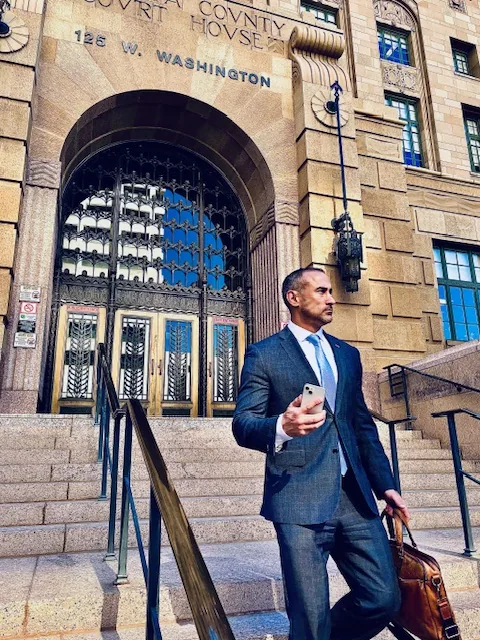
Christian Lueders
Former Maricopa County Felony Prosecutor
Free consultation · Available 24/7
Not a Good Time to Talk? Request a Call Back
Leave your name and phone number, and we will return your call. Those are the only required fields. Please do not include details about what happened.
Would you rather call? Reach us at (602) 888-8020, available 24/7. Submitting this form does not create an attorney-client relationship.
Arizona’s drug crimes are primarily defined under Arizona Revised Statutes (ARS) Title 13, Chapter 34. This chapter covers a wide range of drug crimes, including possession, trafficking, and manufacturing of controlled substances like methamphetamine, heroin, cocaine, and prescription drugs without authorization.
Drug crimes can range from misdemeanors to felonies, depending on factors such as the type of drug, amount, and whether intent to distribute is present.
Christian Lueders, founder of Guardian Law, is a criminal defense attorney with extensive experience in Arizona drug crime cases. As a former Maricopa County felony prosecutor, Christian brings unique insight to defending clients against charges outlined in Chapter 34. He uses his understanding of Arizona’s drug statutes to review the evidence, explain your options, and work to limit the impact a charge can have on your life. Whether that means challenging the evidence or negotiating with prosecutors, Christian Lueders is dedicated to defending the rights of people accused of drug crimes in Arizona.
Our Case Process

Arrest and Initial Appearance
Whether in a pre-charge stage, or if you have already been arrested, this is when you need a free consultation with our legal team. Ask for your lawyer.

Free Initial Consultation
During your free consultation, our legal team will review your situation, answer your questions, and explain your options and possible next steps.

Pre-Trial & Motions
In the pre-trial phase, we gather all evidence during discovery, and pre-trial motions are filed to address legal issues or suppress evidence.

Trial & Verdict
If your case goes to trial, Christian Lueders uses his experience as a former Maricopa County felony prosecutor to challenge the State's evidence, protect your rights, and present a strong defense before a judge or jury.
Free One-on-one Confidential Consultation
Don’t Wait – Call Us Now to Speak with an Arizona Drug Crimes Defense Lawyer
What are the Types of Drug-Related Offenses You Can Be Charged With?
Under Arizona Revised Statutes Title 13, Chapter 34, drug-related offenses encompass a range of charges, from possession to distribution, with penalties based on the type of drug, intent, and circumstances. Here are some primary drug-related charges under Chapter 34:
Toxic Vapor-Releasing Substances (ARS 13-3403)
This charge applies to the possession and sale of vapor-releasing toxic substances, such as certain inhalants. Arizona restricts the sale of these substances to minors, with misdemeanor or felony classifications based on the severity.
Sale and Possession of Precursor Chemicals (ARS 13-3404 & 13-3404.01)
Arizona criminalizes the sale and possession of precursor chemicals used to manufacture controlled substances like methamphetamine. This offense, often classified as a felony, aims to deter illegal drug manufacturing.
Marijuana-Related Offenses (ARS 13-3405)
Adults 21 and older may legally possess limited amounts of marijuana under Arizona law (ARS 36-2852). Possession over those limits, possession by someone under 21, and unlicensed sale or transportation can still lead to criminal charges. The severity depends on the amount and the conduct, and larger quantities and sale-related activity are charged as felonies.
Prescription-Only Drugs (ARS 13-3406)
Unauthorized possession, distribution, or manufacturing of prescription-only drugs, including misbranded pharmaceuticals, is prohibited. Penalties vary, but violations are generally classified based on the specific drug and situation.
Dangerous Drugs (ARS 13-3407)
This statute covers offenses related to “dangerous drugs” like methamphetamine. Charges for possession, sale, transportation, or manufacturing of these substances are generally felonies, and methamphetamine offenses are treated especially seriously.
Narcotic Drugs (ARS 13-3408)
Arizona law enforces strict penalties for narcotic drug offenses, including possession and distribution of drugs such as cocaine or heroin. The classification and penalties escalate based on the drug amount and intent.
Drug Offenses Involving Minors (ARS 13-3409)
Charges involving minors in drug offenses, such as using minors in drug-related activities, carry severe penalties to discourage any exposure of minors to illegal substances.
Possession of Drug Paraphernalia (ARS 13-3415)
Arizona prohibits the possession, sale, or manufacture of drug paraphernalia. The statute treats these offenses as low-level felonies, although some cases can end up treated as misdemeanors. Paraphernalia for lawful adult marijuana use is excluded, and civil forfeiture is also possible under this statute.

What is the Difference Between a Dangerous Drug Crime and a Narcotic Drug Crime?
In Arizona, drug crimes fall into different classifications depending on the type of substance involved, with “dangerous drugs” and “narcotics” each defined under separate statutes.
Dangerous drugs typically include substances like methamphetamine, LSD, and ecstasy. These drugs are classified as “dangerous” because of their high potential for abuse and significant physical or psychological effects.
Narcotic drugs, on the other hand, include substances such as heroin, cocaine, fentanyl, and many prescription opioids. Arizona lists the drugs in each category in ARS 13-3401, and the category determines which statute applies and how the offense is charged.
What are The Threshold Amounts for Unlawful Substances?
In Arizona, the “threshold amount” is a quantity set by law for certain drugs (ARS 13-3401). In sale, transportation, and similar cases, an amount at or above the threshold can limit probation and increase the sentence. Prosecutors may also point to the amount when they allege drugs were held for sale, but the amount alone is not the charge.
Threshold amounts are set for specific substances under Arizona law, including:
- Heroin: 1 gram
- Cocaine: 9 grams
- Methamphetamine or Amphetamine: 9 grams each
- Marijuana: 2 pounds
- Fentanyl: 9 grams
- LSD: 0.5 milliliters or 50 blotter units
For other drugs not specifically listed, the threshold is generally a market value of at least $1,000.
How is Drug Trafficking Defined?
Arizona law does not have a single charge called “drug trafficking.” Cases people describe as trafficking are usually charged as possession for sale, transportation for sale, sale, or manufacturing under the statute for the drug involved.
These are serious felonies, and amounts at or above the threshold can lead to mandatory prison.
Penalties depend on the drug, the amount, the conduct charged, and any prior convictions, and can include prison, fines, and forfeiture of property.
What Are Exemptions and Exceptions Recognized By the Law?
Exemptions and exceptions in Arizona drug laws recognize specific situations where certain individuals or groups are legally permitted to possess, distribute, or use controlled substances, primarily for medical, scientific, or official purposes.
Exemptions refer to situations where individuals are entirely free from certain drug laws due to their role or profession. For instance, under ARS §13-3412, licensed manufacturers, wholesalers, and pharmacists, as well as medical practitioners, are exempt when handling controlled substances as part of their professional duties.
Similarly, federal and state officers are exempt when dealing with controlled substances in the course of their official work.
Exceptions are specific legal carve-outs for particular scenarios. For example, Arizona law has exceptions for lawful medical marijuana use and for seriously or terminally ill patients with a qualifying prescription.

How Can a Defense Attorney Defend Against Drug-Related Charges?
A defense attorney can use several strategies to fight drug-related charges, seeking outcomes that range from dismissal to reduced sentencing.
Common defenses include challenging the legality of searches and seizures; if evidence was obtained without proper procedures, it may be suppressed. Attorneys may also question the accuracy of drug testing, chain of custody, and whether the substance met the “threshold amount” for more serious charges.
Mitigating factors can also play a role in reducing charges. First-time offenders, for instance, may qualify for lesser penalties or alternative sentencing, especially if their offense was nonviolent and related to personal drug use.
Rehabilitation efforts, employment, and community ties are other factors a judge may consider at sentencing.
In some cases, a prosecutor may agree to a lesser charge, or a drug treatment or diversion program may be available. What is possible depends on the charge, the county, and the person’s history.
How Can Guardian Law Help?
With years of experience as a Maricopa County felony prosecutor, Christian knows firsthand how these cases are handled and can anticipate how prosecutors might approach each charge. This background allows him to create defenses that directly address the strengths and weaknesses in the state’s case.
Christian’s background as a prosecutor helps him evaluate the State’s evidence and talk with prosecutors about how a case might be resolved. Depending on the facts, options such as probation, alternative sentencing, or reduced charges may be possible in some cases.
With Guardian Law, clients get an advocate who genuinely cares about achieving the best possible result in challenging times.
Our Mission & Promise to You
Guardian Law Group is dedicated to providing exceptional legal representation to those facing criminal charges in Arizona. We take a personal approach, combining legal knowledge with individual attention so you feel supported throughout the entire process.
If you or someone you care about is facing criminal charges in Arizona, you don’t have to go through it alone. Attorney Christian Lueders and the team at Guardian Law Group are committed to your freedom and ready to help.
Personalized Representation
We understand that every case is unique and tailor our approach accordingly.
Aggressive Defense
We’re relentless in defending your rights and pursuing the best possible outcome.
Keeping You Informed
We believe in keeping you updated at every stage so you can make confident decisions.
Your rights, freedom, and future are important. Let us put our experience and dedication to work for you.
- Phone: 602-888-8020
- Our Office Location: 3101 N Central Avenue, Suite 850, Phoenix, AZ 85012
- Free Confidential Consultation: Contact us to schedule a meeting to discuss your case in detail.