
Guardian Law Group · Arizona
First-Time Domestic Violence Charge in Arizona: Plea Options, Diversion and DV Classes
A first DV charge is not a conviction.
The outcome depends on the facts, the prosecutor and the court.
For many people, a domestic violence charge is their first time in the criminal system. An argument at home turned into a 911 call, and now there is a case number, a court date, and a no-contact order.
This guide explains the realistic outcomes for a first-time misdemeanor DV charge: dismissal, diversion where the prosecutor offers it, a plea to a different charge, or a DV conviction with mandatory classes. It also covers what each outcome means for firearms and future charges. For the bigger picture, see our Arizona domestic violence defense page.
Follow every release condition, including no contact. A violation can bring a new charge and make every option below harder to reach.
Awards & Recognition

Best of the Valley 2026

Platinum Client Champion 2024 & 2025

Top 100 Criminal Defense

Criminal Defense Attorneys 2025

Litigator of the Year, Criminal Defense, 2025

Clients’ Choice Award 2024 & 2025
Quick answer
A first-time misdemeanor domestic violence charge in Arizona can end in a dismissal, a diversion program, a plea to a different or reduced charge, a trial, or a DV conviction. Diversion, where offered, usually means completing a counseling program in exchange for dismissal, but only the prosecutor decides who gets it. If you are convicted of a misdemeanor DV offense, the judge must order a domestic violence offender treatment program. A DV conviction also counts toward a future felony charge and can affect your gun rights.
What Does a “DV” Charge Mean in Arizona?
Domestic violence is not a separate crime in Arizona. It is a label added to an underlying offense, such as assault or disorderly conduct, when the people involved have a qualifying relationship (A.R.S. § 13-3601(A)). The offense keeps its normal classification (§ 13-3601(M)), and the complaint must be marked “DV” (§ 13-3601(H)).
Qualifying relationships include current and former spouses, people who live or have lived together, people with a child in common, a pregnancy by the other party, certain relatives and in-laws, and current or former romantic partners.
The alleged victim does not control the case. The State brings the charge, and the prosecutor decides whether it continues. The Phoenix City Prosecutor’s Office says this plainly in its domestic violence FAQ. Read more about Arizona’s DV arrest rules.
What Are the Most Common First-Time DV Charges?
| Charge | Typical class | Maximum for a first offense |
|---|---|---|
| Assault (A.R.S. § 13-1203) | Class 1, 2 or 3 misdemeanor, depending on the type | 6 months / 4 months / 30 days in jail (§ 13-707); fines up to $2,500 / $750 / $500 plus surcharges (§ 13-802) |
| Disorderly conduct (A.R.S. § 13-2904) | Class 1 misdemeanor (class 6 felony if it involves a weapon) | 6 months in jail; up to $2,500 plus surcharges |
| Criminal damage (A.R.S. § 13-1602) | Depends on the dollar amount of damage | Varies by class |
These are maximums, not typical sentences. State law does not set a mandatory minimum jail term for a first misdemeanor DV conviction; the judge decides within the limits. Some DV allegations are charged as felonies, such as aggravated assault involving strangulation (A.R.S. § 13-1204(B)). This article focuses on first-time misdemeanors.
What Are the Possible Outcomes for a First DV Charge?
- Dismissal or no charges filed. The prosecutor may decline or dismiss if the evidence does not support the charge, such as when self-defense is clear or witness accounts conflict. An act of justified self-defense is not domestic violence (§ 13-3601(B)).
- Diversion. Where offered, you complete a program and the charge is dismissed. See below.
- A plea to a different or reduced charge. Negotiated with the prosecutor, often based on weaknesses in the evidence.
- A DV conviction by plea or at trial, with mandatory DV offender treatment and possibly fines, probation, or jail.
- Trial. If the State cannot prove the charge beyond a reasonable doubt, the result is an acquittal. Read what happens if a DV case goes to trial.
No lawyer can promise which of these you will get. The facts, your record, the court, and the prosecutor’s policies all matter.
Is Diversion Available for a First-Time DV Charge in Arizona?
Sometimes. Diversion is a program run by the prosecutor’s office, not a right. For county attorneys, Arizona law says the county attorney “has sole discretion to decide whether to divert or defer prosecution,” and other prosecuting agencies, such as city prosecutors, may run their own programs (A.R.S. § 11-365).
Here is how one large program describes it. The Phoenix City Prosecutor’s Office runs a domestic violence diversion program for misdemeanor cases. Its victim pamphlet explains that at arraignment or the pretrial conference, the prosecutor may decide, based on the type of crime and the defendant’s record, that a case is eligible. The defendant is then sent to a counseling or education program, and if it is completed successfully, the charges are dismissed (Phoenix City Prosecutor victim rights pamphlet; Office of the Phoenix City Prosecutor).
Other city courts, justice courts, and county attorneys in Maricopa, Pinal and Yavapai counties set their own rules. Some offer DV diversion, some offer it only in limited cases, and some do not offer it at all. Eligibility usually depends on things like the type of charge, any injury, prior record, and the prosecutor’s view of the case.
Diversion is not automatic, even for a first offense. Missing classes, a new arrest, or violating release conditions can end diversion and send the case back to prosecution. A lawyer can also tell you whether the evidence supports pushing for a dismissal instead.
What Plea Deals Are Common in First-Time DV Cases?
Every plea offer is case-specific, but first-time DV negotiations commonly focus on:
- Reducing the charge, for example from a class 1 assault to a lower-class offense.
- Removing the DV designation, by pleading to an offense that is not on the statute’s list of DV offenses. Not every offense can carry the DV label (§ 13-3601(A)).
- Agreed terms at sentencing, such as no jail, a fine, or unsupervised probation, depending on the court.
The label on a plea matters as much as the class. A DV designation brings mandatory treatment, counts toward a future felony, and can affect firearm rights. Before you accept any offer, ask exactly what you would be pleading to and what follows from it. Our guide to plea bargains in Arizona explains how offers are negotiated and what to weigh before you accept one.
What Are DV Classes in Arizona?
“DV classes” usually means a domestic violence offender treatment program. They show up in two different ways:
- After a conviction. If you are convicted of a misdemeanor DV offense, the judge must order you to complete a DV offender treatment program at an approved facility (A.R.S. § 13-3601.01(A)). You pay for it (§ 13-3601.01(C)), and the program reports to the court whether you finished (§ 13-3601.01(D)).
- As part of diversion. A diversion program may require similar counseling, but finishing it leads to a dismissal instead of a conviction.
Program length varies by provider, court, and assessment. Some people ask about starting classes before the case is resolved. Whether that helps depends on the case, so talk with your lawyer before you enroll.
Why Does Avoiding a DV Conviction Matter?
- Future felony risk. A third DV offense within 84 months can be charged as aggravated domestic violence, a class 5 felony (A.R.S. § 13-3601.02). Your first conviction counts toward that total. See how repeat DV offenses are handled.
- Firearms. Federal law bars anyone convicted of a “misdemeanor crime of domestic violence” from possessing firearms or ammunition (18 U.S.C. § 922(g)(9)). Whether a plea triggers the ban depends on the offense and the relationship. Arizona also prohibits possession while on probation for a DV offense (A.R.S. § 13-3101(A)(7)(d)). Read how DV charges affect gun rights.
- Jobs and background checks. See DV charges and employment and DV charges and background checks.
- Sentencing alternatives. Some courts exclude DV convictions from jail alternatives. For example, Phoenix Municipal Court’s home detention program is not available for a DV conviction (Phoenix City Code § 2-100(B)(3)).
- Family court. DV findings can come up in custody cases. See DV charges and child custody.
What Should I Do After a First DV Charge?
Do
- Read your release conditions and follow every one.
- Save texts, call logs, photos, and names of witnesses.
- Write down your own timeline while it is fresh, for your lawyer only.
- Keep every court date.
Don’t
- Contact the alleged victim if a no-contact order is in place, including through friends or social media.
- Ask the alleged victim to “drop the charges.” They can’t, and it can create new problems.
- Talk to police about the incident before speaking with a lawyer.
- Accept a plea at your first appearance without understanding the DV consequences.
For a step-by-step list, read steps to take after being charged with domestic violence.
Charged with domestic violence for the first time? Talk with a lawyer before your next court date. Available 24/7.
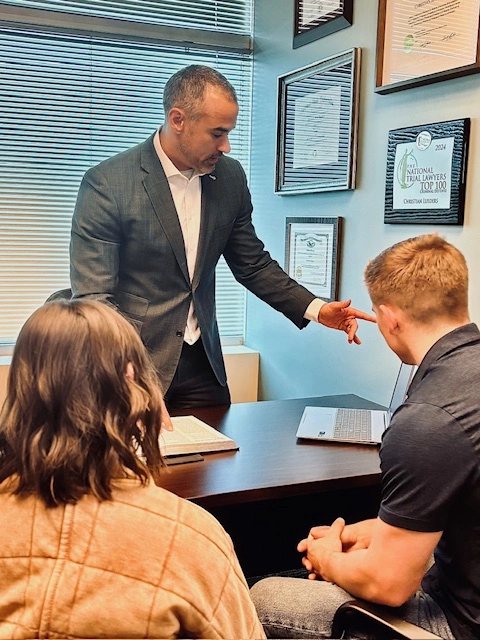
Why Talk With Guardian Law Group?
A former prosecutor’s view of the State’s case
Before defending clients, Christian M. Lueders served as a Maricopa County felony prosecutor. He has seen how DV cases are charged and negotiated from the prosecutor’s side: the 911 call, the officer’s report, photos, and witness statements.
Careful, trial-ready preparation
The first step is the evidence: what was reported, what the officers saw, and what the other witnesses say. That review shapes whether to seek dismissal, diversion, a different plea, or trial.
Clear answers about what comes next
You should understand what each option means for your record, your firearm rights, and any future case before you decide. Read what clients say about Guardian Law Group.
Questions About First-Time DV Charges in Arizona
Short answers to common questions. Every case is different, so use these as a starting point for a conversation with a lawyer.
What happens for a first-time domestic violence charge in Arizona?
It can end in dismissal, diversion where the prosecutor offers it, a plea to a different or reduced charge, a trial, or a DV conviction. A misdemeanor DV conviction requires a domestic violence offender treatment program.
Can I get diversion for a first DV charge in Arizona?
Possibly, but it is up to the prosecutor. Diversion programs and eligibility rules vary by city and county, and some prosecutors do not offer DV diversion (A.R.S. § 11-365). Where it is offered, completing the program generally leads to dismissal.
Are DV classes mandatory in Arizona?
Yes, after a misdemeanor DV conviction. The judge must order a domestic violence offender treatment program at an approved facility, and you pay for it (A.R.S. § 13-3601.01). Diversion programs may also require counseling.
Can the victim drop domestic violence charges in Arizona?
No. The State brings the charge and the prosecutor decides whether it continues. The alleged victim can share their views with the prosecutor (Phoenix City Prosecutor DV FAQ).
Will a first DV conviction affect my gun rights?
It can. A misdemeanor crime of domestic violence triggers a federal firearm ban (18 U.S.C. § 922(g)(9)), and Arizona prohibits possession while on probation for a DV offense (A.R.S. § 13-3101(A)(7)(d)).
Contact Guardian Law Group
Talk With a Lawyer About Your First DV Charge
If you have been arrested or cited for domestic violence in Arizona, contact Guardian Law Group to talk about the evidence, your release conditions, and your realistic options.
Available 24/7.
3101 N Central Avenue, Suite 850
Phoenix, Arizona 85012
Serving Maricopa, Yavapai, and Pinal counties and non-tribal courts across Arizona.
Please do not include confidential case details in an initial online inquiry. Contacting the firm does not create an attorney-client relationship; the firm must first agree to represent you.
Request a consultation
Available 24/7. Call or send a short message through our contact page. Helpful to have ready:
- Your citation or complaint and release paperwork
- Your next court date and the court name
- Any no-contact or protective order you received